


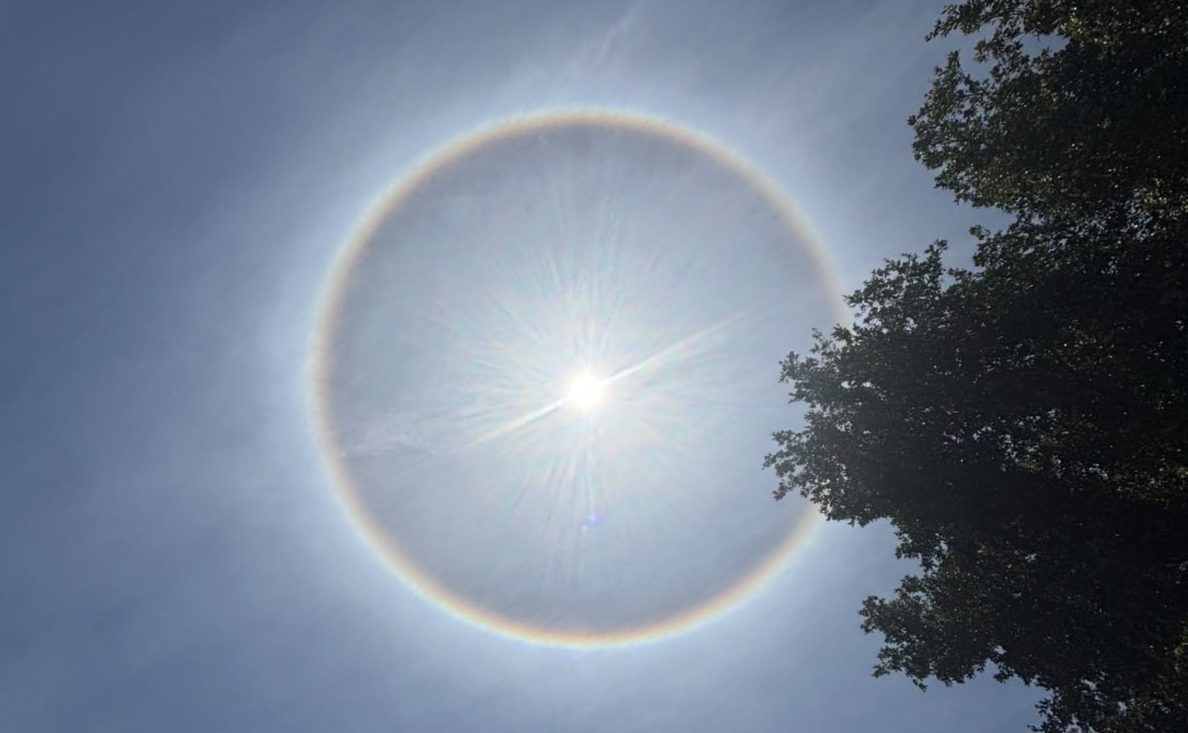
Solar Halo: What Is It and What Does It Mean?
The skies of South Africa looked different this past morning and early afternoon as the sun made an unusually striking appearance. From the heart of the country in Gauteng to the corners of the Western Cape, the solar halo ringed the sun for a few hours, allowing those lucky enough to live under a cloudless sky to experience one of the Earth’s rare weather phenomena.
What are Solar Halos?
A solar halo is a naturally occurring but rare celestial phenomenon in which the light that shines from the sun refracts off hexagonal ice crystals hanging high up in the sky.
Is it harmful or safe to capture?
Much like a regular sun, solar haloed suns must not be looked at directly, as they will cause harm. This has nothing to do with the ring itself, as it is an optical phenomenon. While the sun might look different in its splendour, it still poses a threat, as the rays can cause lasting damage to the eyes.
So while capturing it, it is advised that one not look directly at it.
For those who had no idea
We all like taking pictures when there’s an eclipse or when there’s a violent storm just to catch a glimpse of its majestic lightning. Solar halos, however, normally come without warning. Unlike the above-mentioned sky phenomenon, solar halos are not forecasted ahead of time. Weathermen may have information about the conditions that may later cause a solar halo, but it is never a foregone conclusion like solar and lunar eclipses. So, if you missed it, there wasn’t a chance for you to prepare for one because it is an event that happens on the day. And even when it does happen, you are also at the mercy of clouds.
So there could’ve been one in your area today, but you probably couldn’t capture it because of the clouds.
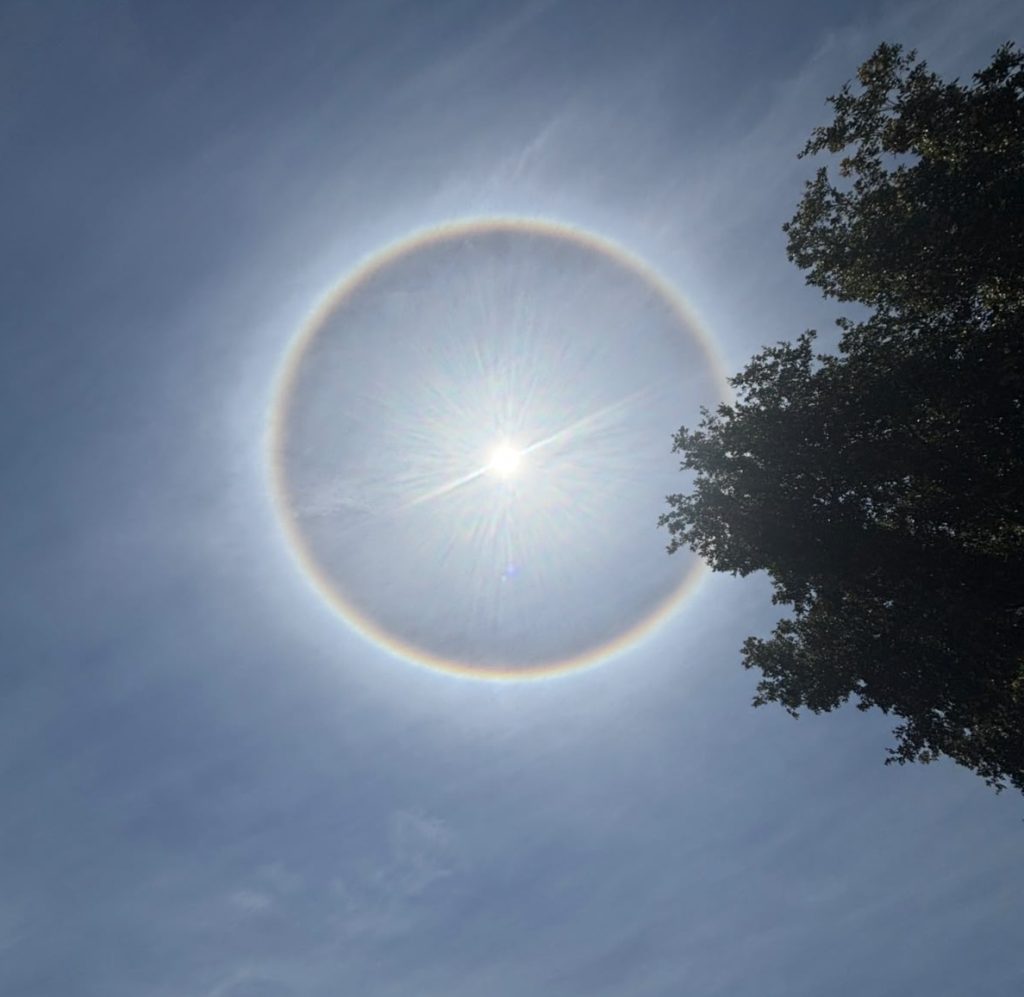
A sun halo | SUPPLIED
When is the next weather phenomenon?
So, you missed the majestic halo because you didn’t know, or there was a horizon-to-horizon whiteout of clouds that didn’t permit any clear view of the sun. What now?
Well, the next phenomenon may or may not be another solar halo since they cannot be predicted ahead of time; however, a solar eclipse will be gracing the skies of Mzansi in 2027. The partial solar eclipse is expected to take place on the 6th of February 2027.
If you missed out this time, mark your calendars and get ready.