


THE WIFE: A journey into the psyche of the woman in an abusive relationship
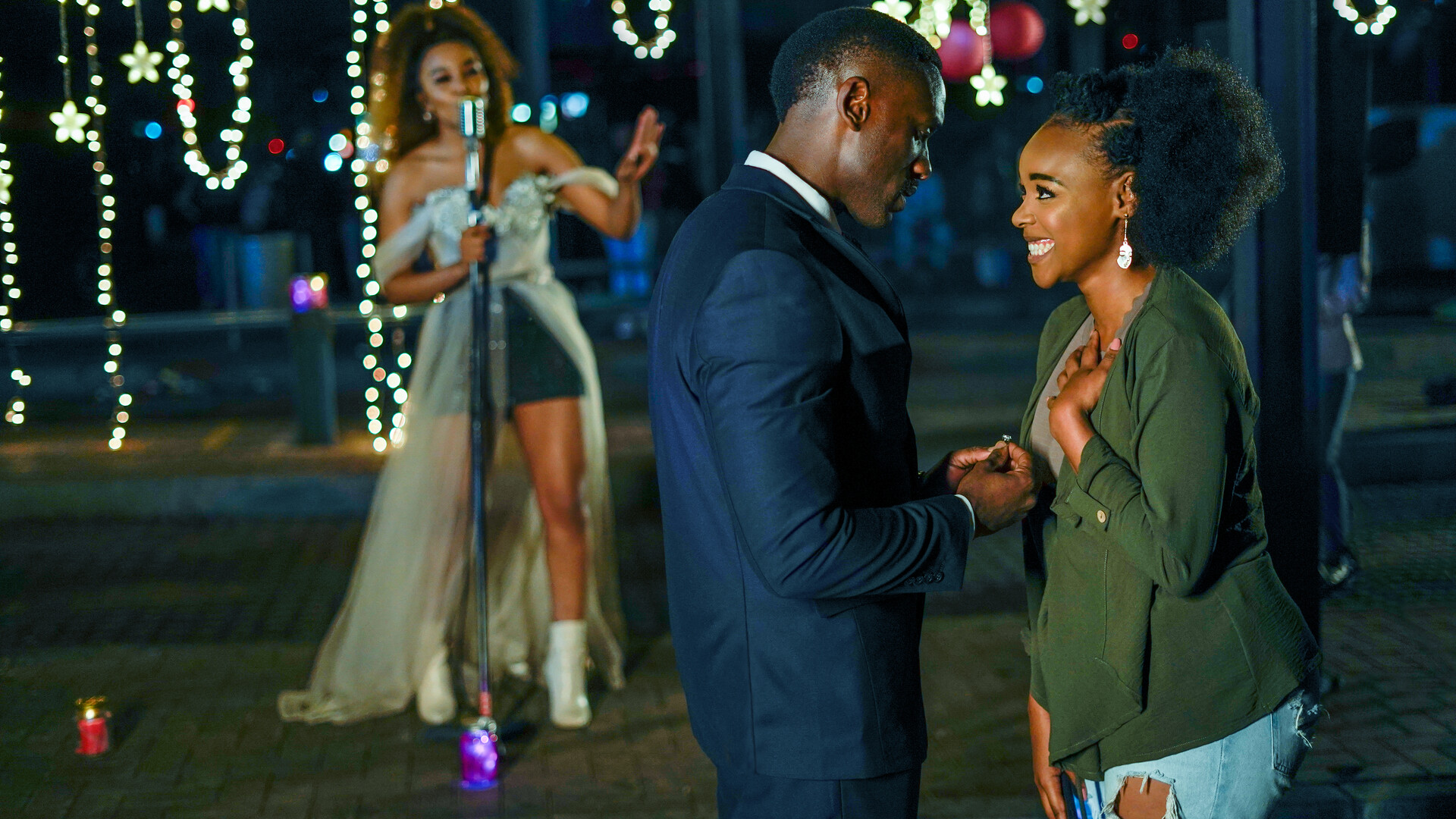
In a heart wrenching and triggering scene , episode 30 of The Wife featured Mqhele brutally beating his wife, Hlomu. Mqhele, brought to life on our screens by the striking and mysteriously charismatic Bonko Khoza along with Hlomu played by the captivatingly beautiful Mbalenhle Mavimbela share an onscreen chemistry that would make even Alessandro Volta envious. They are clearly two people madly in love with each other however this is no Disneyland love story and Mqhele is no Prince Charming.

His character is a lot more complex and has a lot more depth and through his relationship with Hlomu we’re able to see Mqhele for more than just the stereotypical violent Zulu in the taxi industry. Very often, when the question of domestic violence comes up, the solutions put forward are: Why doesn’t she open a case? Why doesn’t she leave him? But Hlomu’s story is perhaps taking us on a journey where we begin to understand and empathize with the violent Mqhele. It is very tempting to simply dismiss Mqhele as just this violent no good man who does not deserve Hlomu. Perhaps that may also be fair comment, he is an adult after all .
However, Hlomu and by extension the viewer, understands the depth and complexity of Mqhele’s character. As much as all available adjectives for an abusive man may befit him for what Hlomu sees in him is also a true description. He really is a loving, romantic and sweet man who is very much in love with and cares for Hlomu.
The real life person is that complex, it is never simply black and white. In Hlomu’s eyes at this point in the story, Mqhele is a man who witnessed his mother’s throat being brutally slit by an uncompromising and angry mob.
He is a man who grew up in an environment where violence was the only tool for survival, it is in fact a miracle that he is now an adult that still has such a soft, loving, and humane side to him growing up in an environment that could only dehumanize him. Hlomu sees Mqhele for what he is, a man with a traumatic past that needs therapy and because of the love she has for him, simply leaving him when his ugly side emerges is not a simple decision.
Because there is always that little voice in her head urging her to stay a little longer because he “loves” her, that he needs her help and typical of many women who are in love, her maternal instincts kick in and she makes excuses for him the same way a mother would excuse her mischievous son. Perhaps just calling it a woman’s maternal instincts is also too simplistic of a view. From early childhood women are socialized to be the enduring, supportive and nurturing women that looks out for everyone.
This is often to the benefit of society in general however in these specific cases, this act of being socialized to be the nurturing women becomes their undoing. Mqhele’s character opens up the discussion of the black men’s attitudes towards mental health and getting help to deal with those traumas.
His dismissiveness to Hlomu’s suggestion of seeing a mental health professional to talk about his past is typical of many black men in South Africa. In this instance we see how patriarchy is bad for men too. It is detrimental to men in the sense that it demonizes being expressive and opening up emotionally and thus even the thought of therapy is viewed as an assault on their masculinity. Patriarchy imprisons both the man and the woman. In most parts, growing up in black communities is a traumatic experience that is psychologically damaging and it is a miracle that black people in South Africa are able to reach adulthood still clinging onto what’s left of their humanity.
To highlight Mqhele’s traumatic background is in no way an attempt to sanitize his abusive tendencies but it is to highlight how Hlomu’s story helps delve into the mind of women who choose to stay, they are able to see the beauty beyond the beast and that is often why they cling onto hope, hope that he can change and be a better man, hopes that he really will never do it again. There can be no true despair without hope, in such abusive relationships in the South African context we know all to well that it is the hope that kills you.
Master Langa
articulated brother …but the question still stands why doesn’t she leave him? Until when will she decide that she had too much… I won’t lair personally their love story is starting to irritate me.
Zwile "Nkentshane" Ximba
It’s most certainly a question that lingers but unfortunately I think it is something the woman can only truly answer. Until she makes the decision to leave, no one on the side can force her to
Sphamandla
Mental health is the elephant in the room, the implications of Mqhele’s unattended traumatic past proves to be a big problem to the potentially beautiful love story shared by the two. But how long should Hlomu subject herself to this beautiful mess?. There is no definite time where all the suffering will end, no certainty that it will even end at all.
No matter how much you love a person but if their psychological imbalance continuesly scars you then you unfortunately have to let go the dream of happily ever after before in this case let go of your life in the hands of your lover.
She loves him but she is no shero, must she sacrifice herself to save Mqhele?
Nokulunga Njapha
I for one have been in an abusive relationship like Hlomu. It is very difficult to just leave although your mind tells your to pack and leave. One minute he’s this loving sweet guy and the next – just someone you don’t know. You fail to understand why? Why would you beat me up like this and they cry “ I’m sorry “ after an hour . LOL there were days I’d ask him to see a therapist and he’d agree to the idea but will never put effort to actually attend classes.. embarrassment? I think not!! Some women won’t be lucky as me – survivors of this traumatic experience.. some leave the relationship in a coffin .. I have someone very close to me who died because she thought the guy will one day change.
Men need to do better ..,
Zwile "Nkentshane" Ximba
There needs to be greater conversation about this issue most certainly
Ayanda
What I’ve realized, is that when you truly love, it is very difficult to leave when you not satisfied you’ve done more than enough to save the relationship. There’s always that relentless spirit of perseverance emanating from the need beyond just saving the relationship but your partner and becoming his/her hero. The satisfaction you get from hearing someone you love appreciating you for not giving up on them is satisfying, assuring and affirming. But this is the manifestation of a disturbed psychological state of a victim. Having said that, there is never a black and white solution. We can only wait for the victim to snap out of it and only hope it’s soon enough.
Luthando Nkomo
In abuse stories we always seek to find the villain in it’s physical form, never really delving deeper into the root problems. I think that as a society we need to understand that if we “”empathize”” with the abuser we aren’t excusing his actions but rather trying to find the root cause. I can’t not think of the trauma of a little [black] boy yearning for his mother’s love and the anger that erupts every time you think of the brutal manner in which she was killed. It is certainly not an excuse for his adult self but violence is something he grew up with because as an orphan the only method of surviving they knew is FIGHTING. Differentiating between a normal conversation amongst two people in a relationship to express your emotions and literally showing someone how you’re feeling is not something he can comprehend.
Zwile "Nkentshane" Ximba
I love this comment. Understanding why doesn’t necessarily equate to excusing